Rhythm Shooter: Phonk Rush
- 4.4
- Rating
- 1.00M
- Installs
- Free
- Price

 Analysis by App-foxy
I spent time with Rhythm Shooter: Phonk Rush as a music game built around a simple promise: your shots should land with the beat. That focus makes it immediately understandable, but it also means the quality of the experience depends on more than whether the targets are fun to hit. Timing, visual clarity, sound, hand comfort, and the situation in which you play all matter.
This is a free game from CodiPlayer, aimed at Everyone and available on devices running Android 6.0 or later. Its current version is 1.0.5, and it has already passed over a million installs with an average rating of 4.3 from around a thousand ratings. Those figures suggest that the concept is easy for many people to pick up, although popularity alone does not tell me whether it will suit every player.
How clearly the game presents its rhythm challenge
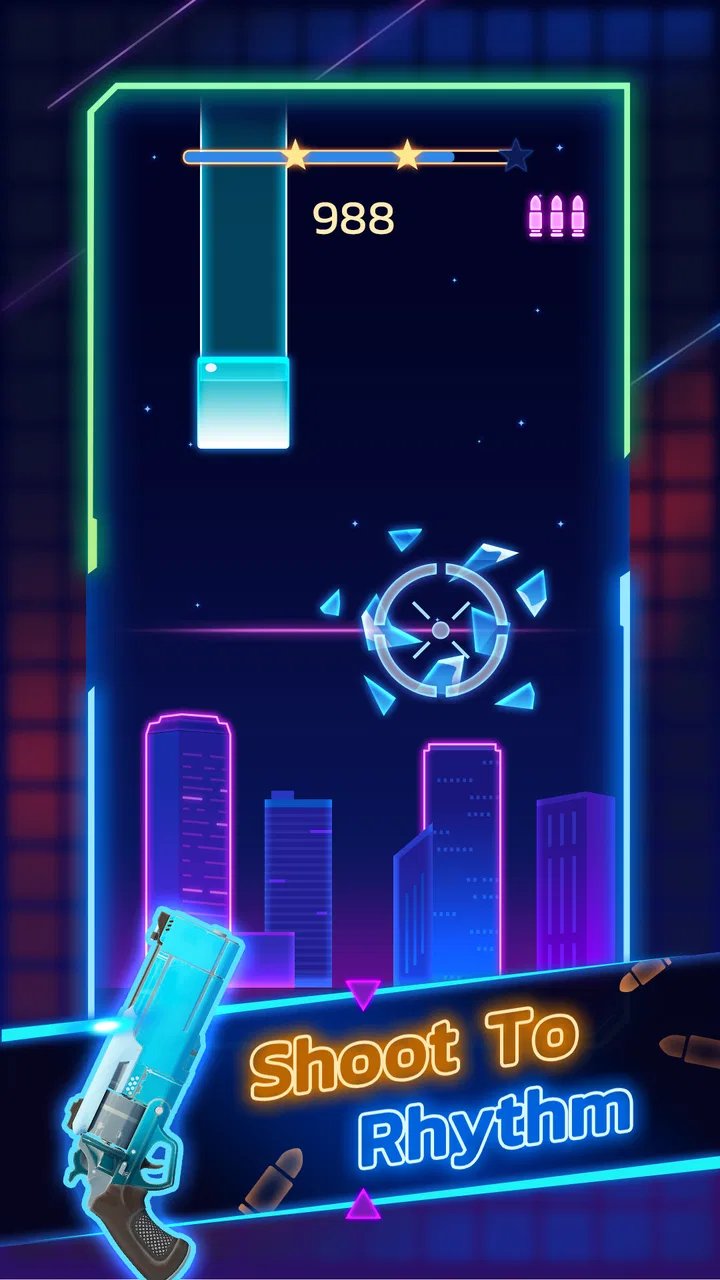
The strongest part of the design is the connection between action and music. Instead of treating the soundtrack as background decoration, the game makes the beat part of the reason to act. I found that this gives each target more meaning: I am not simply tapping objects as quickly as possible, but trying to make my movement agree with what I hear.
You May Also Like

 Blood Strike: 2.5 Anniversary
Blood Strike’s Loadouts Turn Every Drop Into a Tactical Gamble
A close look at Blood Strike’s custom loadouts: how fast access to signature weapons reshapes its battle royale rhythm, rewards preparation, and narrows the gap between fights.

 Pandora - Music & Podcasts
Pandora’s Music Is Easy to Start, but Harder to Recover
Pandora’s strength is its low-effort path from a seed to a station. Its weak spot is how much confidence it asks you to place in connection, setup, and quiet recovery.

 8 Ball Pool
 Is Built on Rivalries, Rematches, and Routine
A close look at the rivalries, rematches, shared routines, and unanswered safety questions that turn a quick pool match into a persistent mobile community.

 Samsung Music
’s Quiet Strength Is Playing What You Already Own
Its reach comes less from spectacle than from dependable access to a personal library. That simplicity is both the app’s strongest retention engine and its ceiling.

 AccuWeather: Weather Radar
AccuWeather Review: A Quick, Clear Forecast for Everyday Decisions
For everyday plans, the best forecast is the one you can understand quickly. AccuWeather makes rain timing, radar, and local conditions easy to act on, with a few trade-offs.

 Hill Climb Racing
Why Hill Climb Racing Still Turns Crashes Into One More Run
A tiny car, a bumpy hill and one more upgrade: Hill Climb Racing keeps resurfacing because its simple chaos makes every near-miss feel personal.
More From Our News Desk



That distinction is important for readability. A rhythm game can become confusing when targets, effects, and timing prompts compete for attention. Here, the central idea is clear enough to understand without a long explanation. The store short description calls it “Phonk Rush,” while the actual appeal is the combination of shooting and beat matching. I could tell fairly quickly what the game wanted from me.
For a new player, the best approach is to begin without chasing perfect timing. I recommend watching the pattern for a moment, identifying whether the targets arrive in a steady pulse or a more demanding sequence, and then letting the music guide the hand. Trying to react only to visual movement can make the game feel faster than it really is.
Navigation matters just as much as the playfield. A music game should let me move from starting a session to playing without making me search through unnecessary menus. Phonk Rush benefits from its focused identity because there is not a large collection of unrelated tools to learn. I can approach it as a quick action game rather than a complicated music platform.
Still, a clean concept does not automatically mean perfect readability. Fast visual motion can be tiring, especially when I play for several rounds without a pause. Players who prefer calm interfaces may need shorter sessions. I also think beginners should avoid judging the game during their first attempt, because learning where to look is part of learning the rhythm.
The most useful mental adjustment is to treat the screen as a timing guide rather than a collection of separate objects. I watch for the next important target, listen for the pulse, and keep my finger movement small. This reduces visual scanning and makes the game feel less frantic. It is a practical technique for anyone who finds busy action screens difficult to follow.
Reading the action without relying on one sense
The game’s central design naturally uses both sight and sound. That can be enjoyable for players who like a strong audiovisual connection, but it also creates a trade-off. If I lower the volume or play somewhere noisy, part of the intended timing support becomes weaker. In a quiet room, the beat can help me anticipate action; in a crowded place, I have to depend more heavily on what is visible.
This is why I would not describe the game as equally comfortable in every environment. It works best when I can concentrate and hear the track clearly. A short session on a sofa or at home feels more suitable than trying to play while walking, traveling through a busy station, or multitasking. The game demands attention even though its basic idea is easy to understand.
Players who are sensitive to rapid movement or strong audiovisual stimulation should approach it in small doses. I found that taking a break after a few intense rounds is more sensible than forcing a long session. The game is designed around momentum, but the player does not have to match that momentum continuously. Stopping before fatigue sets in helps preserve accuracy and enjoyment.
For players with hearing loss or for anyone who cannot use audio comfortably, the key question is whether the visual timing alone feels sufficient. The game’s premise clearly gives music an active role, so I would not choose it as a first option for someone seeking a fully visual rhythm experience. It may still be playable depending on personal perception and the clarity of the screen, but the audio-driven part is central rather than optional in spirit.
The same applies in reverse. Someone who struggles to track fast visual targets may appreciate the beat as a guide, but sound cannot replace the need to identify where to shoot. This is not a game I would recommend as an effortless audio-only experience. Its challenge comes from coordinating both channels, and that coordination is where much of the satisfaction lies.
Motor demands and practical control habits
The shooting format makes hand movement important, but the game does not ask me to perform complicated gestures in the way some mobile action titles do. The main challenge is precision under time pressure. That can be friendly to players who prefer simple touch interaction, while still being demanding for anyone with limited reach, tremor, joint pain, or difficulty making repeated quick taps.
A useful habit is to hold the phone securely and use the finger that gives the most stable control, rather than automatically using the hand I normally use for typing. I also try to keep the device supported instead of gripping it tightly. That small change reduces strain during longer sessions and makes accidental movement less likely.
Players with one-handed use may find the game easier if the important action stays within a comfortable area of the display, but the exact comfort will depend on the phone and the player’s reach. Larger devices can provide more room while also requiring more finger travel. Smaller screens may feel easier to control physically but can make targets harder to distinguish. This is one of the clearest trade-offs between portability and visual comfort.
I would avoid playing while holding a drink, carrying a bag, or standing on a moving vehicle. The need to align shots with the beat makes unstable posture a real disadvantage. A seated position with the phone supported is not just more comfortable; it gives the hands a better chance of making controlled movements.
There is also a difference between reaction speed and timing confidence. A player does not necessarily need extremely fast reflexes if the rhythm becomes familiar, because anticipation can replace some last-second reaction. I found that listening for the next beat and preparing the finger early is more reliable than waiting until a target is almost gone. That is a concrete way to make the game less punishing for players who dislike sudden reactions.
On the other hand, anyone looking for a relaxed music game with little physical pressure may find this format too demanding. The shooting action is not decorative. It turns the music into a test of coordination, so players with hand fatigue or pain should keep sessions brief and stop when control becomes uncomfortable.
Where it fits into ordinary daily situations
Phonk Rush works particularly well as a short break game. I can imagine using it between tasks, during a quiet wait, or after finishing a commute, provided I am seated and able to focus. A round-based rhythm challenge is easier to fit into a day than a game that expects a long uninterrupted story session.
It is less suitable when concentration is divided. I would not play while crossing a street, supervising a child, or listening for an announcement. The timing demands are easy to underestimate because the controls sound simple, but missing visual information for even a moment can break the flow. The game is portable, yet portability should not be confused with safe use in every location.
Noise is another practical factor. In a quiet bedroom, the music can help establish a steady pace. In a shared room, public transport, or a workplace, the soundtrack may be difficult to hear or may disturb other people. Headphones could make the beat easier to follow, but I would still keep the volume comfortable and remain aware of the surroundings. The game is at its best when it has my full attention, not when it competes with everything else around me.
Its Everyone content rating makes it approachable for a broad age range, but that does not mean every child will find fast rhythm action comfortable. Younger players may enjoy the immediate shooting-and-music connection, while adults who prefer slower puzzle games may find the pace tiring. I would introduce it as a short, supervised challenge for children rather than assuming that a general age rating guarantees a perfect fit for every player.
The free price also lowers the barrier to trying it. I can test the basic feel without committing money first, which is useful because rhythm games are highly personal. Some players immediately connect with the beat; others find repeated timing attempts frustrating. Free access makes that discovery easier, but it does not remove the need to consider attention, sound, and hand comfort.
What it does better than ordinary alternatives, and where it falls short
Compared with a conventional music player, this game gives the soundtrack an active purpose. I am not simply listening while doing something else; I am responding to the musical structure. That makes it a better choice when I want interaction and a small challenge rather than passive playback.
Compared with a traditional shooting game, it places more emphasis on rhythm than on exploration, story, or tactical planning. Someone who wants a large world, character development, or complex equipment choices should look elsewhere. The appeal here is concentrated: music supplies the pace, targets supply the immediate objective, and success depends on coordination.
Compared with slower tapping rhythm games, the shooting theme may make the action feel more direct and energetic. That is a strength for players who enjoy a stronger sense of impact. It can also be a weakness for people who prefer gentle visual presentation or who find rapid target tracking stressful. The right alternative depends on whether I want intensity or relaxation.
One non-obvious advantage is that the game can train me to anticipate rather than merely react. When I focus on the beat, I start preparing for the next action before it arrives. That makes the experience feel more musical and can reduce the sense of random difficulty. The trade-off is that this benefit disappears if I play without being able to hear the soundtrack clearly.
Another useful insight is that performance may change with the phone’s physical setup, not just with the player’s skill. Screen size, grip, posture, and surrounding noise all affect timing. If a session feels unfair, I would first change where and how I am holding the device before deciding that the game is too difficult. That simple troubleshooting step can reveal whether the problem is the game or the playing conditions.
Who should try it, and who should skip it
I recommend it to players who enjoy phonk-inspired energy, quick mobile sessions, and games where music directly shapes the action. It is also a good fit for someone who likes improving through repetition: the first attempt may feel busy, but listening more carefully and reducing unnecessary finger movement can make later attempts more controlled.
It is less appropriate for someone searching for a quiet, low-stimulation way to pass time. Players who need strong control over pace, who dislike repeated misses, or who cannot comfortably coordinate visual targets with audio may prefer a slower music game. I would also suggest skipping it during situations that require environmental awareness, because the game rewards concentration rather than casual background play.
For families, the Everyone rating makes the game easier to consider, but I would still pay attention to session length and sensory comfort. A child who becomes frustrated by missed targets may benefit from short turns and a focus on listening rather than winning. The same advice works for adults with limited stamina: the goal should be comfortable play, not forcing a long run.
My inclusive verdict after using it
My overall impression is that Rhythm Shooter: Phonk Rush has a clear and appealing core. CodiPlayer has built the experience around a straightforward relationship between beat and action, and that makes it easy to explain to a friend: listen, line up the moment, and shoot with the music. The free entry point and broad age rating make trying it uncomplicated.
Its inclusiveness is strongest at the level of simplicity. I do not need to learn a large rule set before I can understand the objective, and players who prefer direct touch interaction may appreciate that focus. The main barriers come from the same design choice that gives it personality: it expects attention, timing, visual tracking, and a usable listening environment.
I would therefore recommend it with a practical condition: play seated when possible, keep the phone stable, use a comfortable volume, and take breaks before your hands or eyes become tired. If sound is difficult to use, if fast visual movement is uncomfortable, or if you need a game that works while your attention is elsewhere, another category of music game will probably serve you better.
For me, the best use case is a focused few minutes when I want music to become something I actively respond to. It is not a universal rhythm solution, but it does not need to be. Its real strength is turning a familiar beat into a compact coordination challenge, and players who enjoy that exchange will find a lively free game worth trying.
FAQs for Rhythm Shooter: Phonk Rush
01What is Rhythm Shooter: Phonk Rush?
Rhythm Shooter: Phonk Rush is a music-based action game that combines fast shooting mechanics with phonk-inspired tracks. Players move through energetic levels, aim at targets, avoid obstacles, and try to match their actions to the rhythm. Its appeal comes from combining arcade reflexes, music timing, and visually intense environments in short, replayable challenges.
02How do you play Rhythm Shooter: Phonk Rush?
Gameplay generally requires you to follow the beat while controlling your character or weapon through each stage. You may need to tap, swipe, aim, or react to targets appearing in time with the music. Success depends on timing, accuracy, and quick reflexes. As levels become more demanding, learning the rhythm and memorizing patterns can significantly improve your performance.
03Can Rhythm Shooter: Phonk Rush be played offline?
Offline availability may depend on the specific version and device configuration. Some core levels or previously loaded content may work without an internet connection, while advertisements, updates, online rewards, cloud features, or additional music could require access. It is best to launch the game once while connected, download available content, and check its behavior before relying on it during travel.
04Is Rhythm Shooter: Phonk Rush free to download?
The game may be available as a free download, but free access does not always mean that every feature is included at no cost. Mobile games commonly use advertising, optional purchases, unlockable content, or reward systems. Before downloading, review the store listing for in-app purchase information, supported devices, age guidance, and recent user feedback so you understand the expected experience.
05What devices are compatible with Rhythm Shooter: Phonk Rush?
Compatibility depends on the operating system, available storage, hardware performance, and the version published for Android or iOS. Because rhythm games require responsive controls and stable frame rates, older phones may experience slower loading, reduced visual quality, or occasional lag. Check the official store page for the latest minimum requirements and keep your device and game updated for better performance.
Pros
- Fast rhythm-based gameplay with satisfying music-synced shooting.
- Easy controls make it accessible for quick mobile sessions.
- Phonk soundtrack creates a strong
- energetic atmosphere.
- Increasing difficulty keeps later levels challenging and engaging.
- Bright visuals and effects make successful combos feel rewarding.
Cons
- Gameplay can become repetitive after extended play sessions.
- Some tracks or content may require progress or purchases to unlock.
- Frequent effects may feel visually overwhelming on smaller screens.
- Timing-based levels can be frustrating when performance drops.
- The phonk-focused soundtrack may not appeal to every player.

Rhythm Shooter: Phonk Rush
Gallery